
Why has the shift from ICE to electric slowed down despite initial enthusiasm?

Retail inflation breached the RBI's comfort zone and rose to a three-month high of 6.52 per cent in January, mainly on account of a spike in food prices, as per government data released on Monday. The inflation rate based on the Consumer Price Index (CPI) stood at 5.72 per cent December and 6.01 per cent in January 2022.

Apple's ambitious strategy to expand iPhone exports, shift more production from China to India at a faster pace, and grow its domestic market hits a Trump-sized roadblock.

'What has taken the government so long to understand what the people of this country are going through?'

The decline in demand and rise in raw material prices due to high transportation costs are the major problems faced by micro, small and medium enterprises in the last 27 months, according to a survey. The report by Bhartiya Yuva Shakti Trust (BYST) also said that though markets have stabilised, about 57 per cent of the units that participated in the survey are struggling to get new orders for their merchandise. "Lesser purchasing power of consumers lead to reduced demand and increased raw material cost due to higher transportation cost with increase in fuel prices have been cited among key problems faced by entrepreneurs during the last 27 months," Lakshmi Venkataraman Venkatesan, founding and managing trustee, BYST, said.
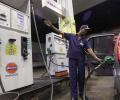
Petrol and diesel prices were on Tuesday hiked by 80 paise a litre while domestic cooking gas prices were increased by Rs 50 per cylinder, ending an over four-and-half month election-related hiatus in rate revision, sources said. Petrol in Delhi will now cost Rs 96.21 per litre as against Rs 95.41 previously while diesel has gone up from Rs 86.67 per litre to Rs 87.47. Simultaneously, the price of a non-subsidised LPG cylinder has been increased to Rs 949.50 for each 14.2-kg bottle in the national capital.

Indian Oil Corporation, Bharat Petroleum Corporation Ltd and Hindustan Petroleum Corporation Ltd are projected to lose around Rs 1,15,500 crore (Rs 1,155 billion) during the year as they sold petrol, diesel, kerosene and cooking gas at below production costs when crude oil prices rose steadily between April and July this year to reach a peak of $147 a barrel in early July.

While, the government has readied a big legislative agenda, the Opposition is raring to corner the ruling dispensation over a host of issues, including handling of the second wave of COVID-19, rise in fuel prices and farmers' stir.

India's trade account could come under pressure and there could be an inflation push if crude oil prices remain above the $90 per barrel (Brent) for a prolonged period since India imports over 85 per cent of its oil and roughly 50 per cent of its gas. A rebound in economic activity is bound to lead to higher fuel demand. While India is the third-largest importer of crude, it is a net exporter of refined products, which helps to compensate to some degree.

Retail investors have become a force to reckon with in the last 10 years with their ownership of Indian equities rising 800 basis points, or 8 per cent, to 23.4 per cent during this period, suggests a recent note from Morgan Stanley. This number, Morgan Stanley said, is set to rise in the next few years as Indian households are still underinvested in equities. India's demographics, policy framework, investor education and modest positive real rates, it said, will fuel the 'equity cult' in India.

Among Sensex stocks, Wipro gained the most by 3.29 per cent. Ultratech Cement, Reliance Industries, Hindustan Unilever, Nestle, NTPC, M&M, HDFC Bank, ITC, Kotak Bank and Axis Bank were among the winners. On the other hand, HCL Tech fell the most by 1.24 per cent. SBI, TCS, Infosys, IndusInd Bank and Tata Steel also dropped.

The wholesale price-based inflation eased for the eighth consecutive month to 4.73 per cent in January on easing prices of manufactured items, fuel and power. The wholesale price-index (WPI) based inflation rate was 4.95 per cent in December 2022 and 13.68 per cent in January 2022. Inflation in food articles, however, rose to 2.38 per cent in January, from (-) 1.25 per cent in December, 2022.

Petrol price on Monday was hiked by 30 paise a litre and diesel by 35 paise, taking the total increase in rates in the last one week to Rs 4-4.10 per litre. Petrol in Delhi will now cost Rs 99.41 per litre as against Rs 99.11 previously while diesel rates have gone up from Rs 90.42 per litre to Rs 90.77, according to a price notification of state fuel retailers. Rates have been increased across the country and vary from state to state depending upon the incidence of local taxation.

Large number of buyers has put purchases on hold because of a combination of factors, including high fuel prices, higher insurance cost, and firm interest rates.

Vegetable rates may ease from September, led by tomato prices, which have started showing signs of correction on the back of increased supply, Reserve Bank of India (RBI) Governor Shaktikanta Das said on Wednesday. "Looking ahead, the spike in vegetable prices in July is starting to see a correction, led by tomato prices. "New arrivals of tomatoes in mandis are already softening the prices, coupled with proactive supply management in the case of onions.
Inflation shot up by 0.1 per cent to over 41-month high of 7.61 per cent week ended July 31, mainly due to surge in prices of fruit and vegetables, edible oil and other manufactured products.

Glimpses from the Congress party's Halla Bol rally at the Ramlila Maidan in New Delhi on Sunday, September 4, 2022
.jpg)
Observing that the prime reason for these losses was high fuel cost which constituted almost 40-50 per cent of an airline's total costs, Civil Aviation Minister Ajit Singh said the aviation turbine fuel (ATF) prices were high due to rising base price and "very high VAT imposed by state governments."

India's electric vehicle (EV) industry hit a new milestone in 2024, with sales surging 26.5 per cent year-on-year to 1.94 million units as of December 29, according to Vahan data from the Ministry of Road Transport and Highways (MoRTH).

The government has slashed by up to a fifth the supplies of cheaper gas to city gas entities that retail CNG to automobiles, increasing their dependence in costly imported fuel. Buying costly imported gas to make up for the shortfall should result in a hike in CNG price but given the ensuing assembly elections in Maharashtra, that may be put off for now. Indraprastha Gas Ltd and Mahanagar Gas Ltd in regulatory filings stated that supplies of domestically produced gas, which was available at a capped rate which is half of the imported price, has been cut.

Deloitte India on Friday said it estimates India's GDP growth at 6.6 per cent in the current fiscal helped by consumption expenditure, exports rebound and capital flows. In its India's economic outlook report, Deloitte said the rapid growth of the middle-income class has led to rising purchasing power and even created demand for premium luxury products and services. With the expectation that the number of middle-to-high-income segments will be one in two households by 2030/31, up from one in four currently, we believe this trend will likely become further amplified, driving overall private consumer expenditure growth, it said.

Low fuel prices to help oil marketing and refining sectors but upstream players will stay under pressure.

BJP-ruled Maharashtra levies 46.52 per cent VAT (47.64 per cent in Mumbai) on petrol, the highest in the country.

Housing sales in seven major cities rose 5 per cent annually to about 1.2 lakh units during the April-June period, while demand fell 8 per cent from the preceding quarter on surge in prices, according to Anarock. Real estate consultant Anarock, which is one of the leading housing brokerage firm, on Thursday released the data of housing market for the current April-June quarter. In April-June 2024, housing sales across seven major cities are estimated at 120,340 units, up 5 per cent from 115,090 units in the year-ago period.
CII opines that a global discussion on the crisis might help building stronger information netwrorks on consumption and production so that corrective measures can be taken across the globe to avert such a crisis. It also advised to develop global food management system under Food and Agricultural Organisation.

In a bid to slash costs, Air India has hedged 10,000 barrels of jet fuel for its aircraft this month, four weeks after its Board gave a nod to the move.
India's manufacturing sector activities improved in September as companies benefited from strengthening demand conditions amid the easing of COVID-19 restrictions, a monthly survey said on Friday. The seasonally adjusted IHS Markit India Manufacturing Purchasing Managers' Index (PMI) improved from 52.3 in August to 53.7 in September, indicating a stronger expansion in overall business conditions across the sector. The September PMI data pointed to an improvement in overall operating conditions for the third straight month. In PMI parlance, a print above 50 means expansion while a score below 50 denotes contraction.

Realtors' body CREDAI on Monday said the cost of construction has gone up by 20-25 per cent, mainly during the last 45 days, due to steep rise in prices of raw materials like steel, and builders will be forced to increase property prices from next month by an average 10-15 per cent. CREDAI-MCHI, the Maharashtra chapter of CREDAI, demanded that the central as well as state governments consider giving relief to the industry by reducing stamp duty and GST rates, besides allowing input tax credit (ITC) to developers. The association said it would not advise member developers to stop construction works as of now, but if the price rise continues then builders would have no option but to halt works at project sites and defer purchase of raw materials.

India's appetite for imported crude oil may wane in fiscal year (FY) 2023 from record levels in pre-pandemic 2019-20 fiscal as higher oil prices, a spillover from the conflict in Ukraine, and increasing use of biofuels affect domestic demand for petroleum products. Brent crude surged to a nine-year high, shy of a July 2008 record $147.50 a barrel, before declining to around $100 a barrel - but the volatility in commodity rates will slow global economic growth and use of fuels. Demand for all oil products may grow at only 2-3 per cent in FY23, slower than the current fiscal and nearly half the 5.5 per cent growth estimated by the petroleum ministry, according to industry officials.
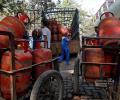
The government on Tuesday announced a Rs 200 per cylinder cut in prices of domestic cooking gas as it looked to counter the cheaper LPG promise of the Congress in upcoming assembly elections in states like Madhya Pradesh.

Retail inflation in August inched up to 3.65 per cent, though vegetables and pulses witnessed price rise in double digits, according to official data released on Thursday. The retail inflation based on the Consumer Price Index (CPI), however, remained below the Reserve Bank's median target of 4 per cent for the second month in a row. It was at a five-year low of 3.6 per cent in July.

Fiscal pressure for the Indian economy is gradually rising, suggested analysts at Jefferies in a recent note, as oil prices (Brent) - which are close to the $100 a barrel mark - continue to climb ahead of a busy election calendar. They added that the sharp rally in the equity markets during the last few months has made valuations costly. As a result, Jefferies expects the Indian markets to remain choppy in the near term.

India's smartphone market grew by three per cent year-on-year (Y-o-Y) in volume in the third quarter (Q3) of calendar year 2024, while its value surged by 12 per cent Y-o-Y to reach an all-time record for a single quarter, according to a report by research firm Counterpoint. The value growth was driven by an ongoing premiumisation trend, while the increase in volume was driven by an earlier onset of the festival season compared to the previous year.

Sri Lanka on Tuesday deployed military personnel at State-run petrol pumps to monitor and manage fuel distribution amidst a shortage that led to serpentine queues of consumers outside filling stations.

India is likely to grow by 7.5 per cent in the first quarter of the current financial year, driven by rising aggregate demand and non-food spending in the rural economy, according to an article in the RBI's May Bulletin released on Tuesday. The Indian economy has demonstrated marked resilience in the face of geopolitical headwinds impacting the supply chain, said an article on the state of the economy published in the May Bulletin.
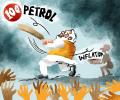
Petrol and diesel prices were on Wednesday hiked by 80 paise a litre each, taking the total increase in rates in the last nine days to Rs 5.60 per litre. Petrol in Delhi will now cost Rs 101.01 per litre as against Rs 100.21 previously while diesel rates have gone up from Rs 91.47 per litre to Rs 92.27 according to a price notification of state fuel retailers. Rates have been increased across the country and vary from state to state depending upon the incidence of local taxation.
With assembly polls in four crucial states in mind, the government has decided not to increase prices of cooking gas and kerosene for a year.

Brent crude oil prices have risen to about $116 a barrel from about $103 a barrel on July 1.
A 6-7 million tonnes shortfall in rice production due to a fall in paddy sowing area is likely to keep rice prices at elevated levels, adding to the inflationary pressure that the slowing economy is already grappling with. Elevated food prices, including that of cereals, had led to retail inflation reversing a three-month declining trend, to touch 7 per cent in August. Similarly, the wholesale price inflation, which declined to 11-month low, also showed price pressures from cereals resulting from wheat output being impacted by severe heat waves in some parts of the country.
The wholesale price-based inflation eased for the third consecutive month in August to 12.41 per cent, on softening in prices of manufactured items, even as food items saw an uptick. The Wholesale Price Index-based inflation was 13.93 per cent in July and 11.64 per cent in August last year. August is the 17th consecutive month of double-digit wholesale price inflation (WPI).
